MESSAGE DEPTH
First Draft, Sydney
13th February-21st March 2026
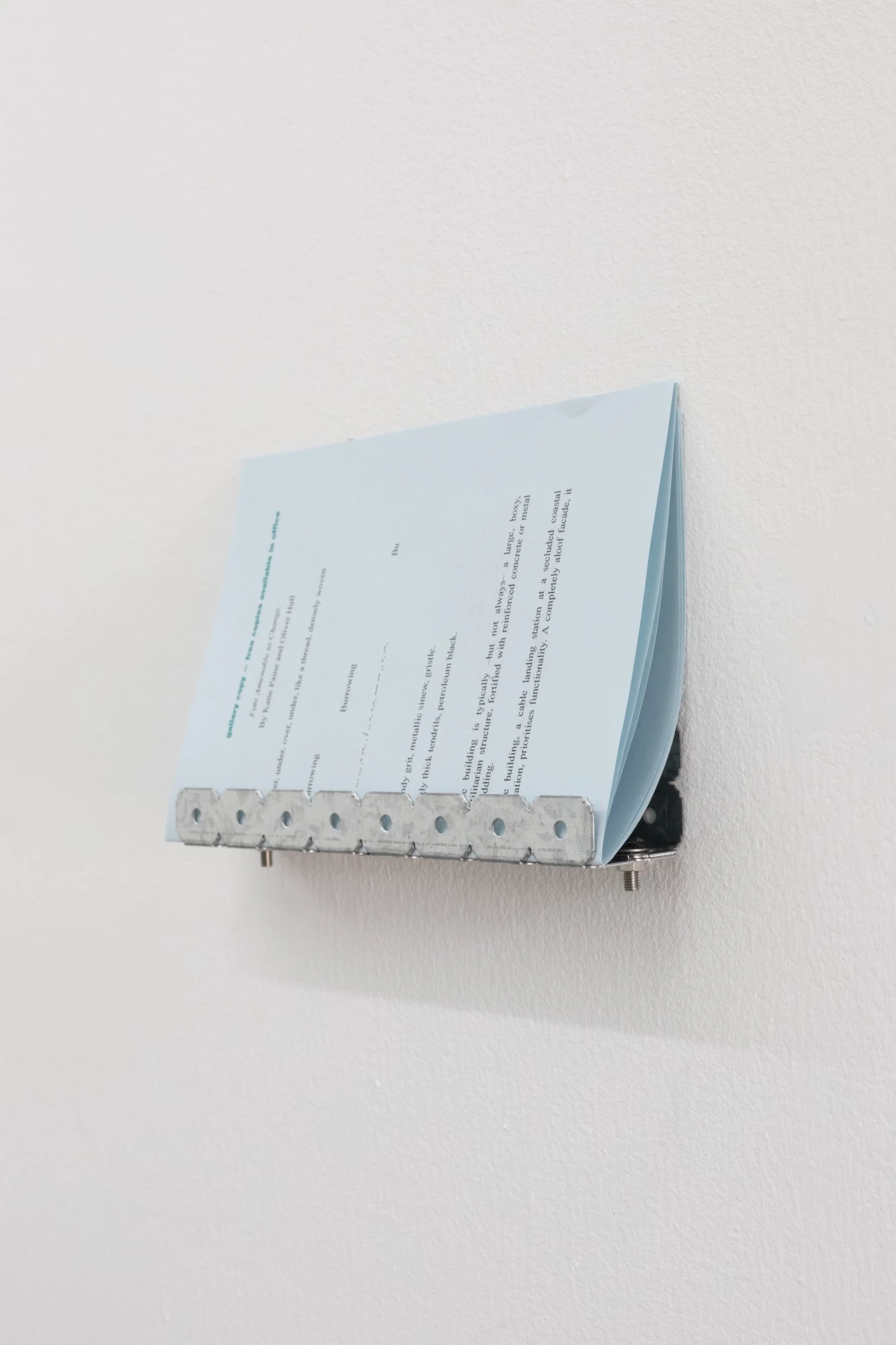
Message Depth explores the hidden systems that underpin contemporary life, tracing how the global flow of information and goods depends on vast, unseen infrastructures that are both technological and environmental. Submarine fibre optic cables thread across the seabed, carrying the world’s data beneath the ocean’s surface, while inland data centres continue this circulation by processing and storing those signals. These facilities rely on immense quantities of water for cooling, water that is drawn from and returned to surrounding natural systems. Alongside these digital networks, the colossal maritime routes of the industrial shipping industry operate as a physical analogue to data transmission: containers for goods mirror packets of data, both traversing oceans along highly regulated, commercialised pathways.
The sea becomes both subject and medium within the exhibition. It is a body of water that conceals, distorts, and sustains these flows, functioning as a metaphor for opacity. We sense the vast systems operating below, yet they remain largely invisible and ungraspable, submerged by geography and corporate secrecy. The sea acts simultaneously as conduit and cover, carrying the world’s communications while veiling the infrastructures that make communication possible. Data centres and cable landing stations emerge as the hidden architectures of the cloud. Though their existence is documented and their approximate locations traceable, they are forbidden spaces: sites we can locate but cannot enter, whose interiors remain inaccessible.
The installation, Message Depth, is an experimental iteration of the artists’ ongoing research into these ideas, a collaboration which began in 2024. This exhibition stems from Katie Paine and Oliver Hull’s shared interest in the politics and poetics of digital infrastructure—its visibility without accessibility, its presence without presence. The cloud, an ethereal metaphor, obscures a vast material landscape of servers, cables, and cooling systems anchored in specific geographies. These architectures are known but unseen. They appear as technical records, coordinates on corporate maps, or subtle markers along the shoreline where cables surface. When represented in planning documents or satellite imagery, they register only as opaque, unmarked boxes embedded within industrial zones or fenced perimeters. Their secrecy is strategic rather than incidental, operating at the intersection of state security and corporate power.
In this sense, these sites function as architectures of exclusion—thresholds that regulate access, visibility, and connection. They exist in tension between proximity and distance: we live alongside them and depend upon them, yet cannot truly approach or know them. Ultimately, they sit at the edge of the visible world, where the immaterial promise of global connection confronts its material reality.
1
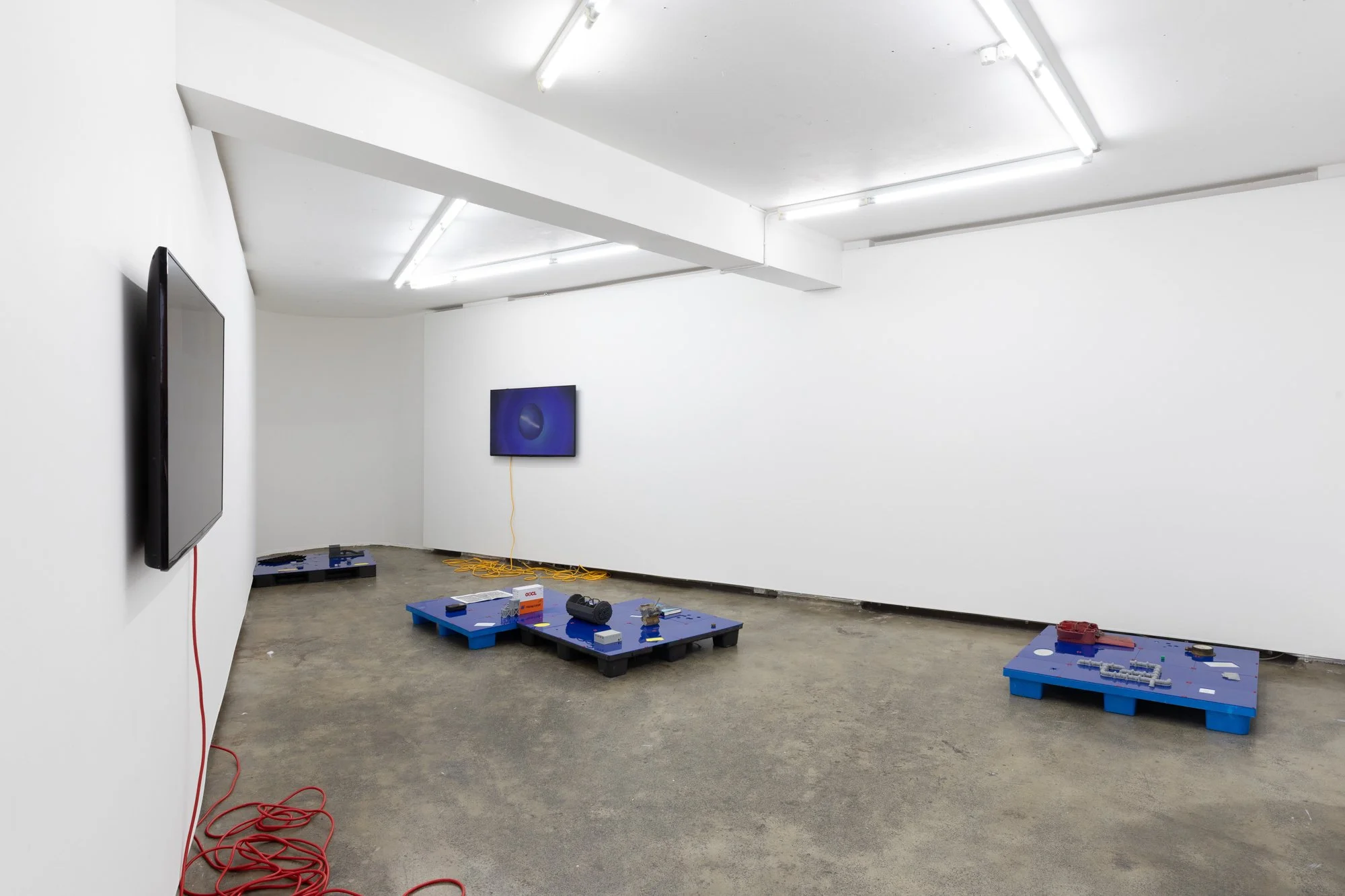
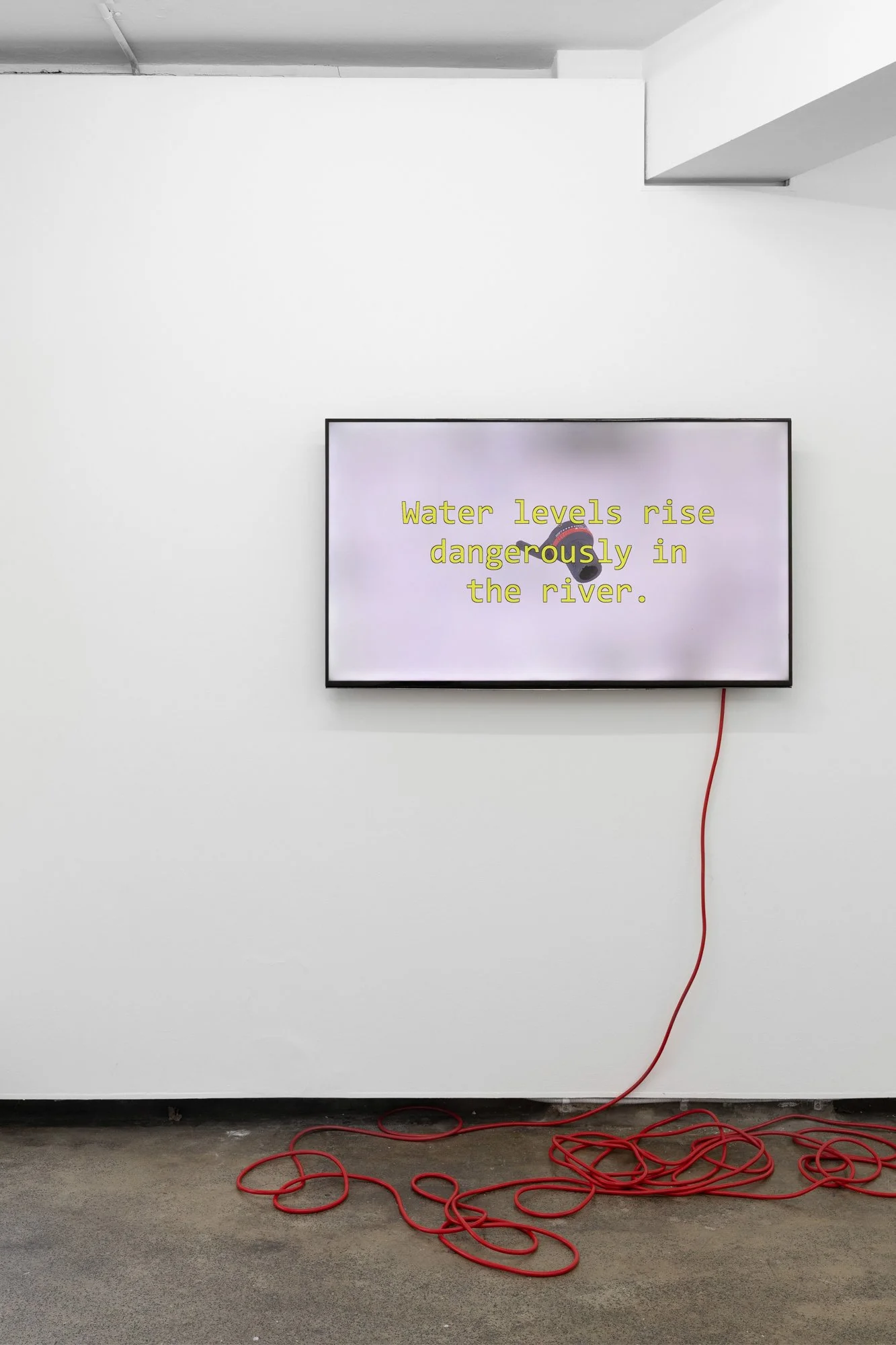
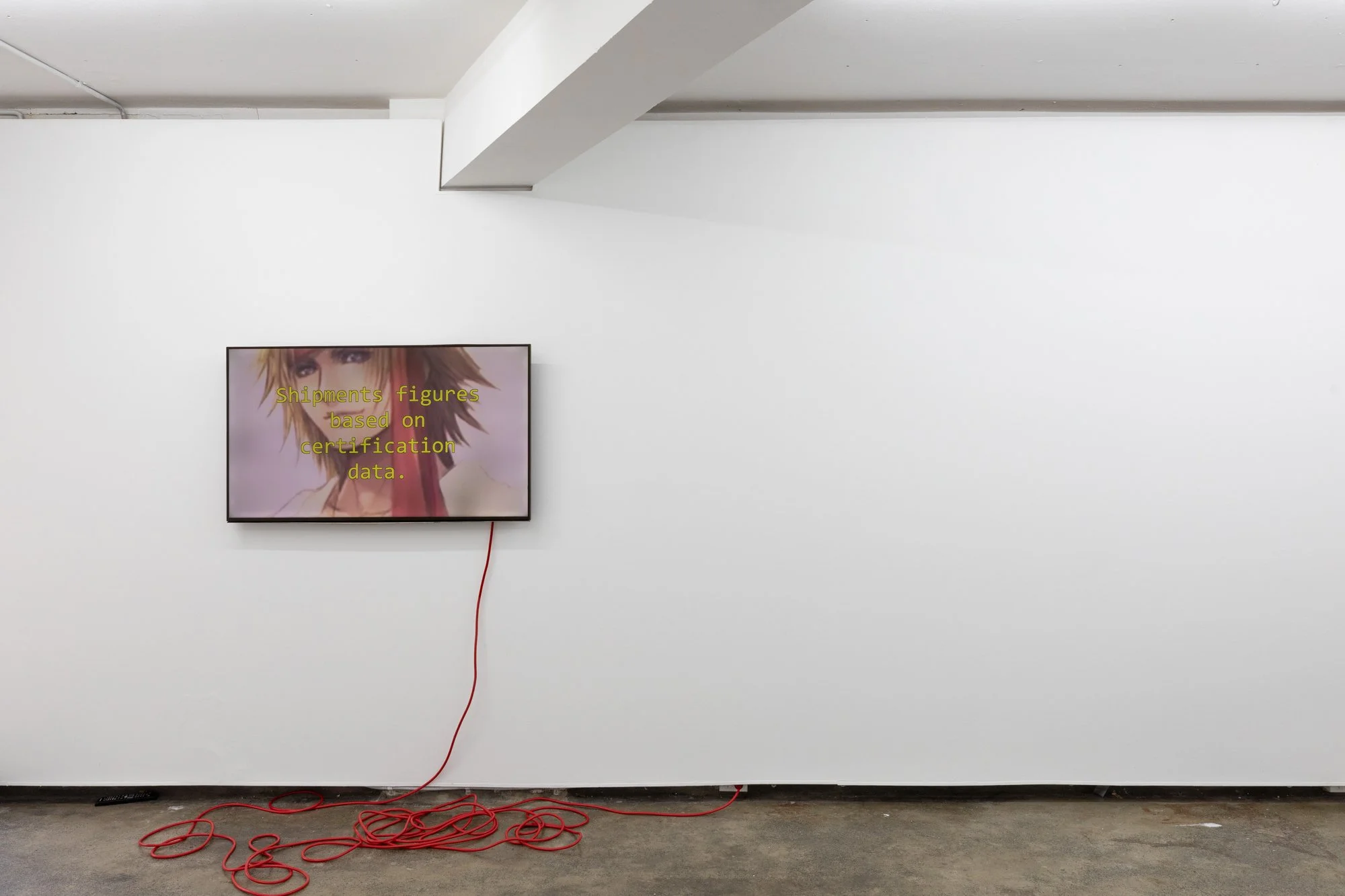
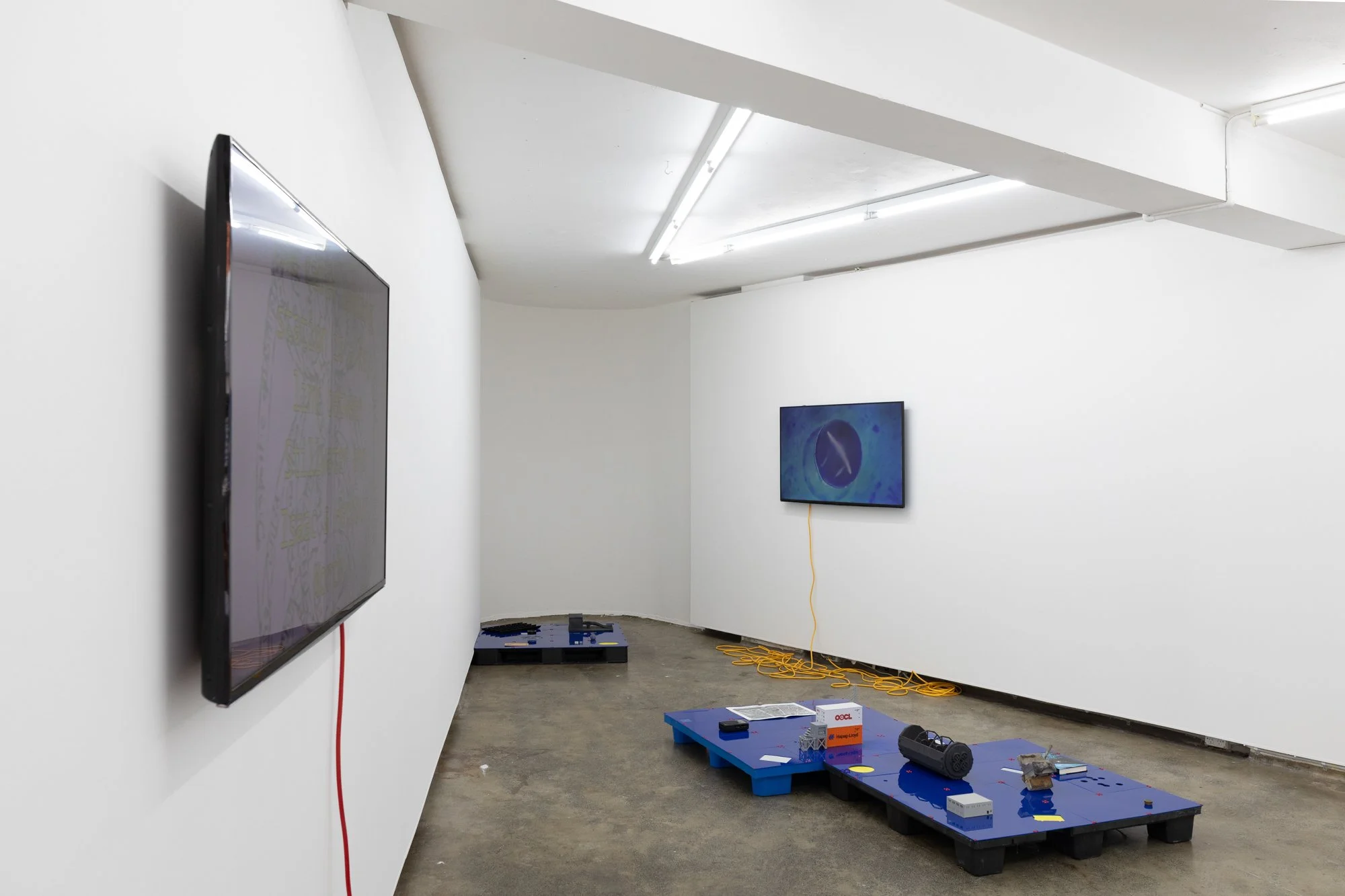
Oliver Hull and Katie Paine, Small Talk, 2025, Monitor, Intel Mini Computer, builder’s extension cord, Python script that approximates narrative from a random assortment of scraped Wikipedia material, ongoing duration.
2
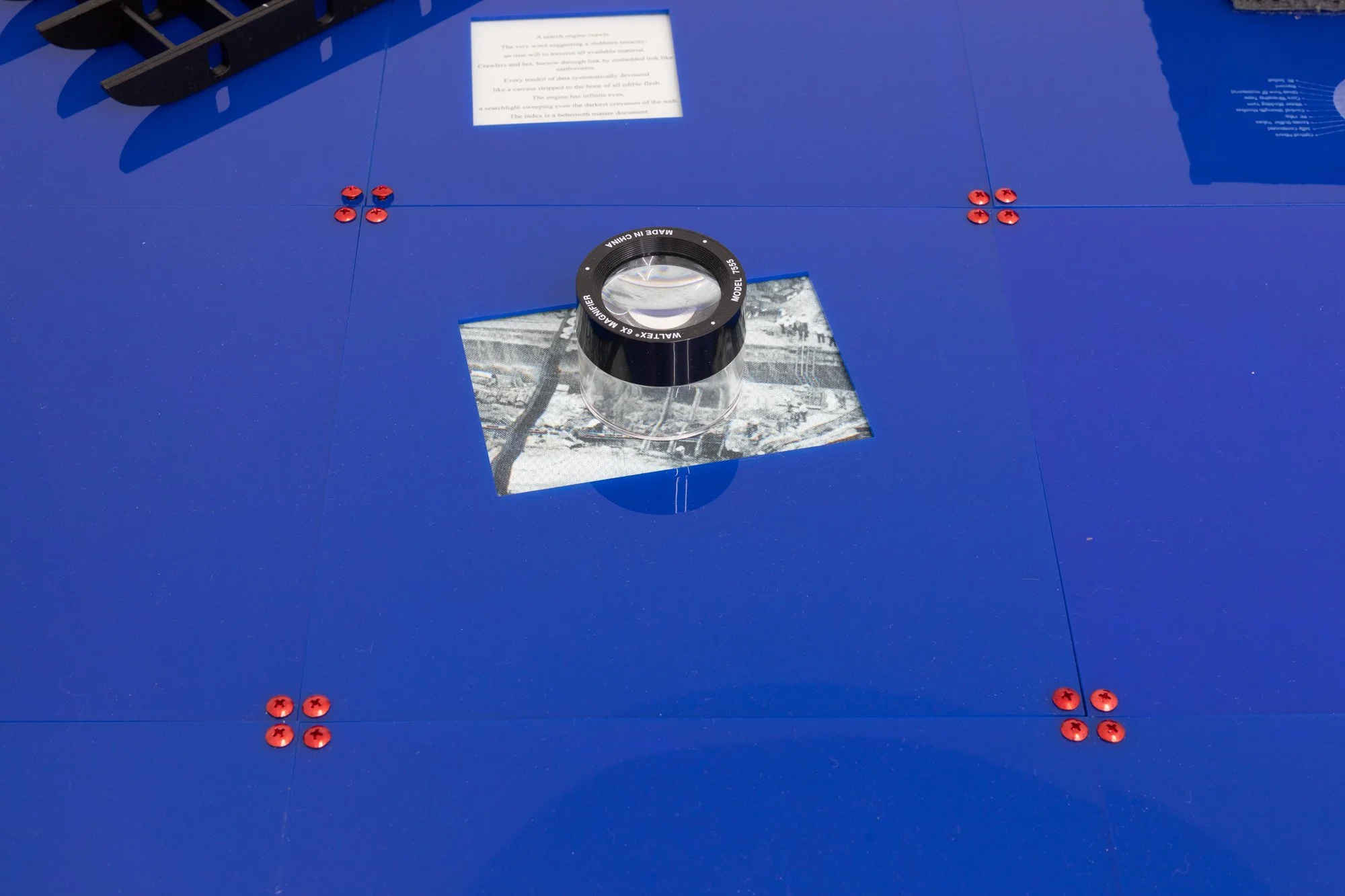
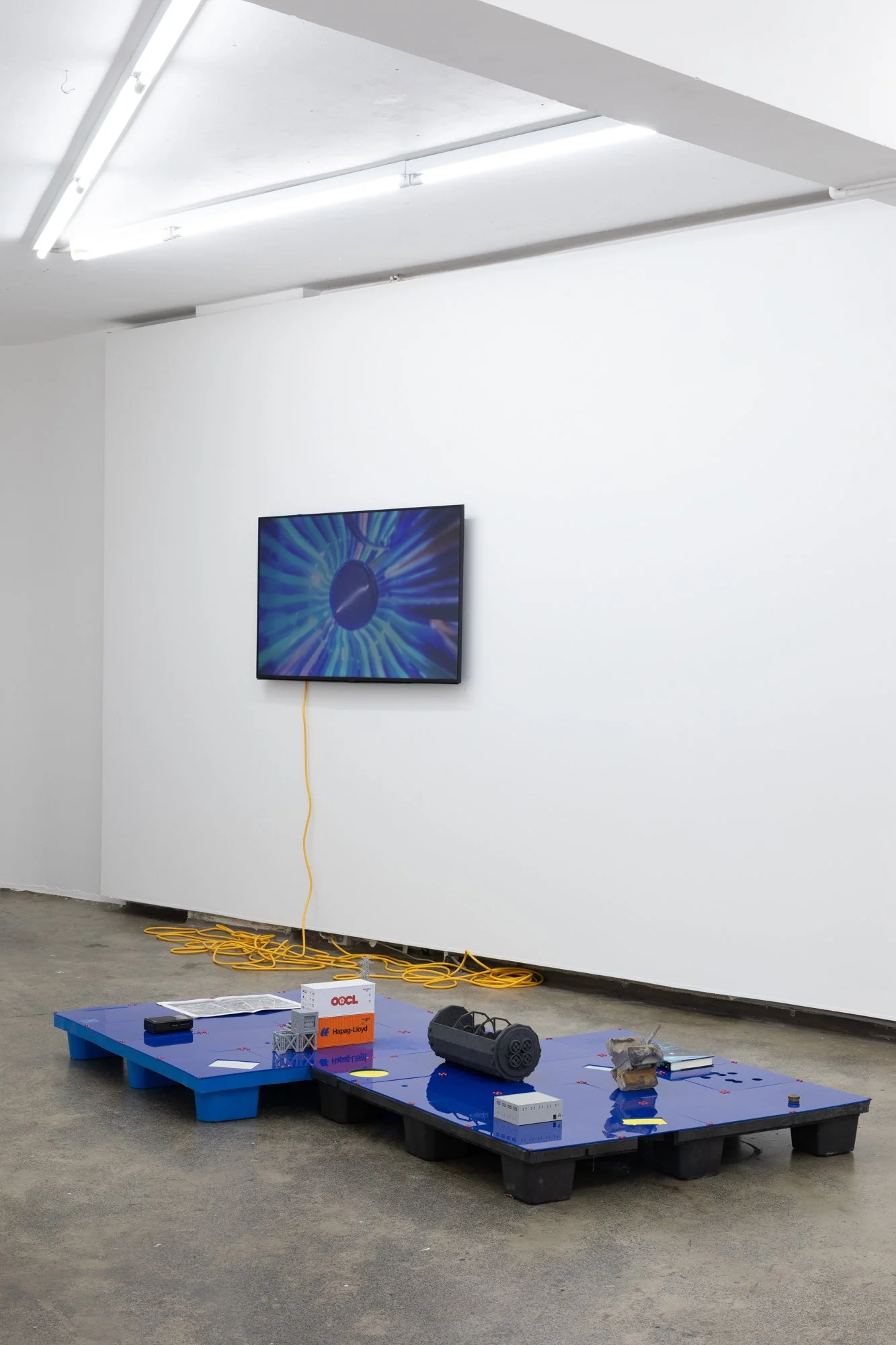
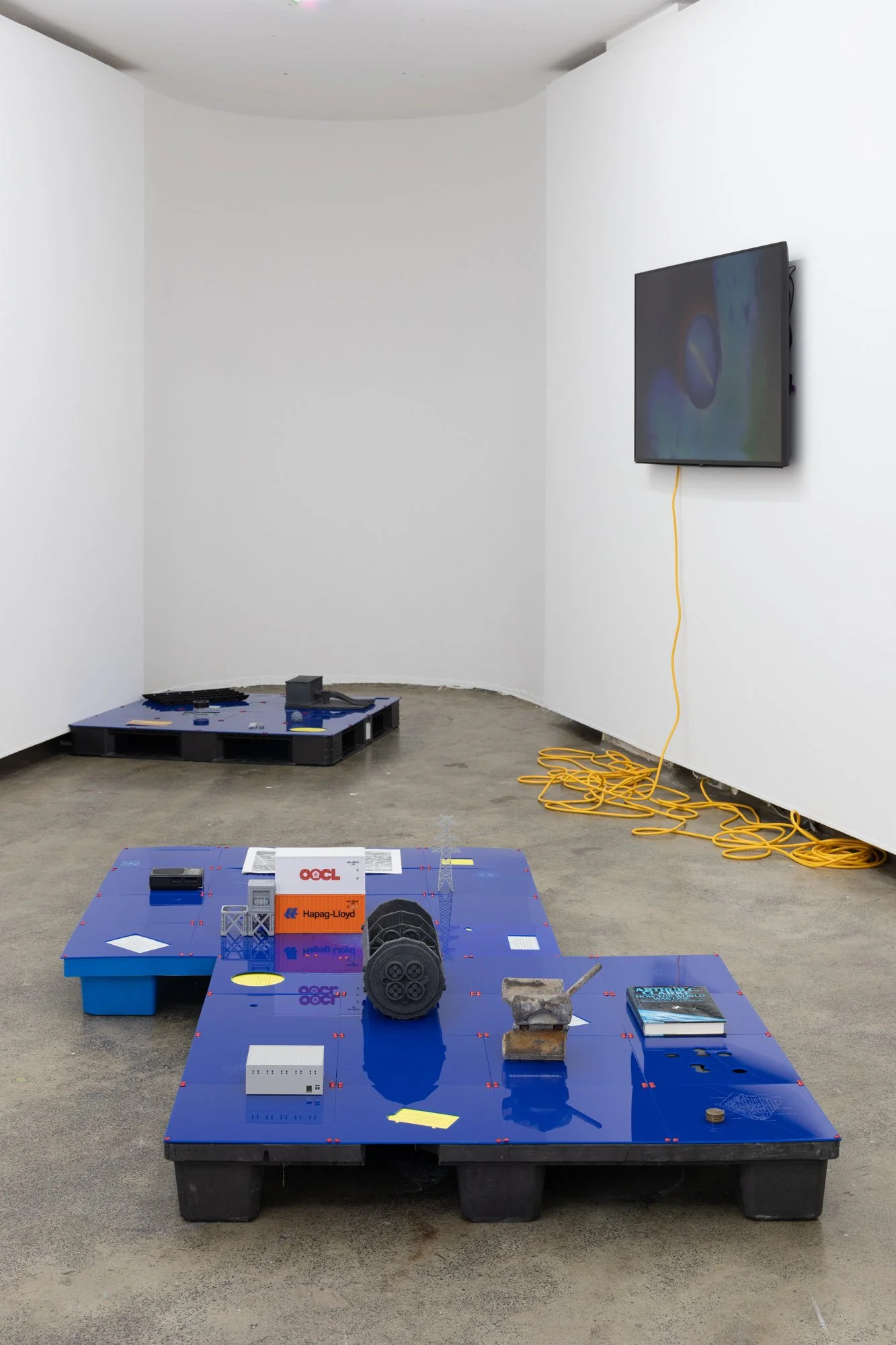
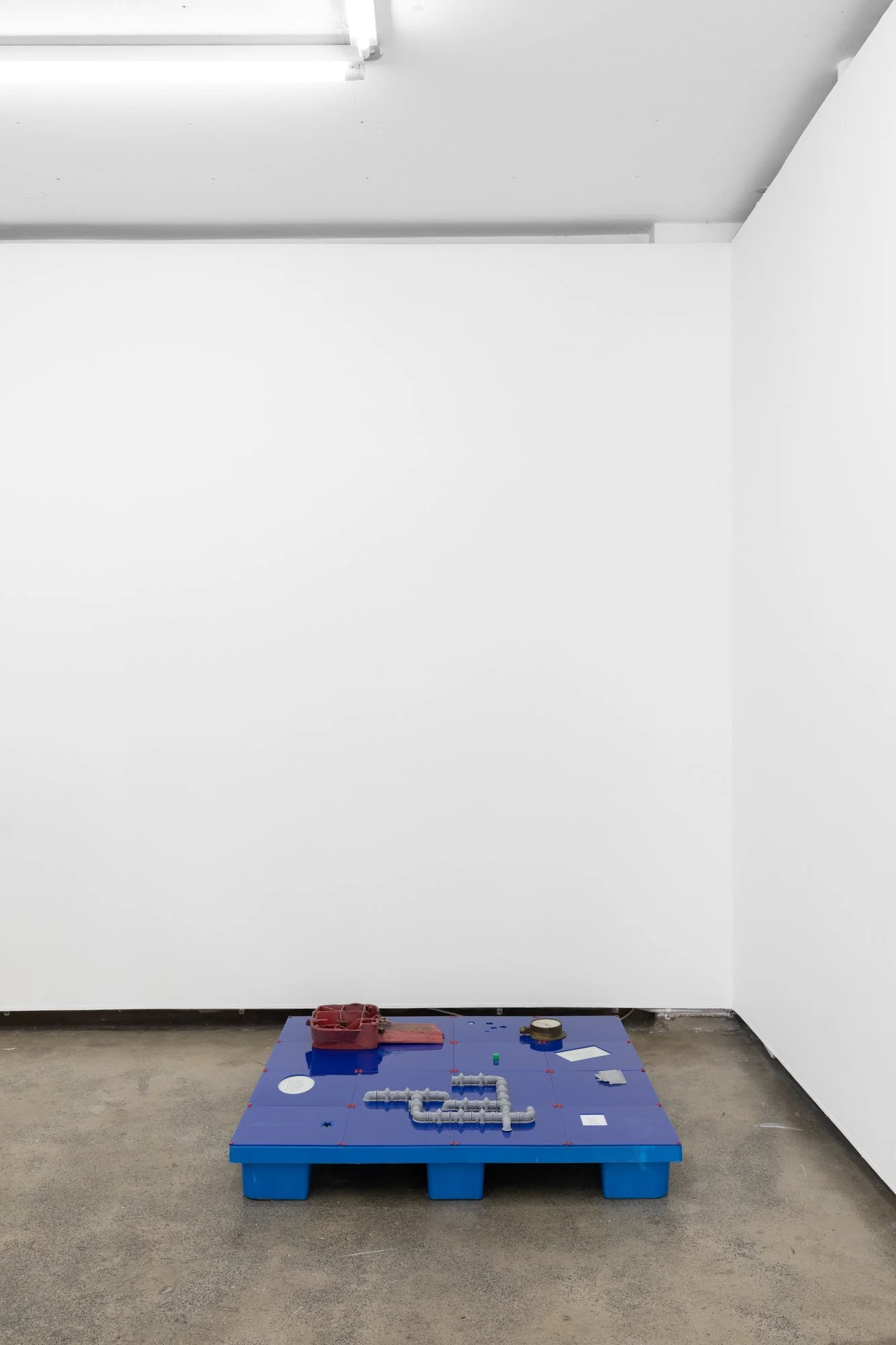
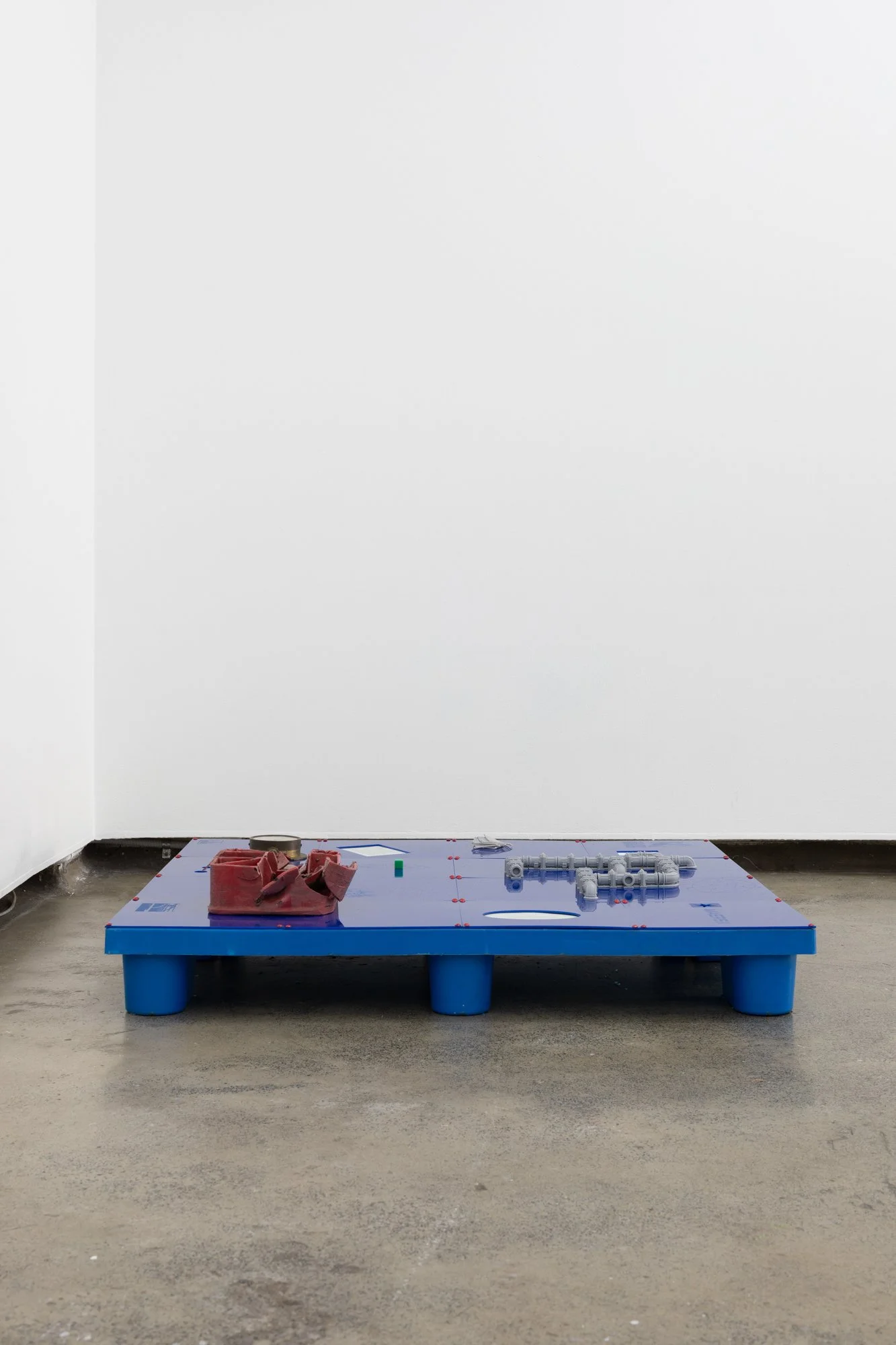
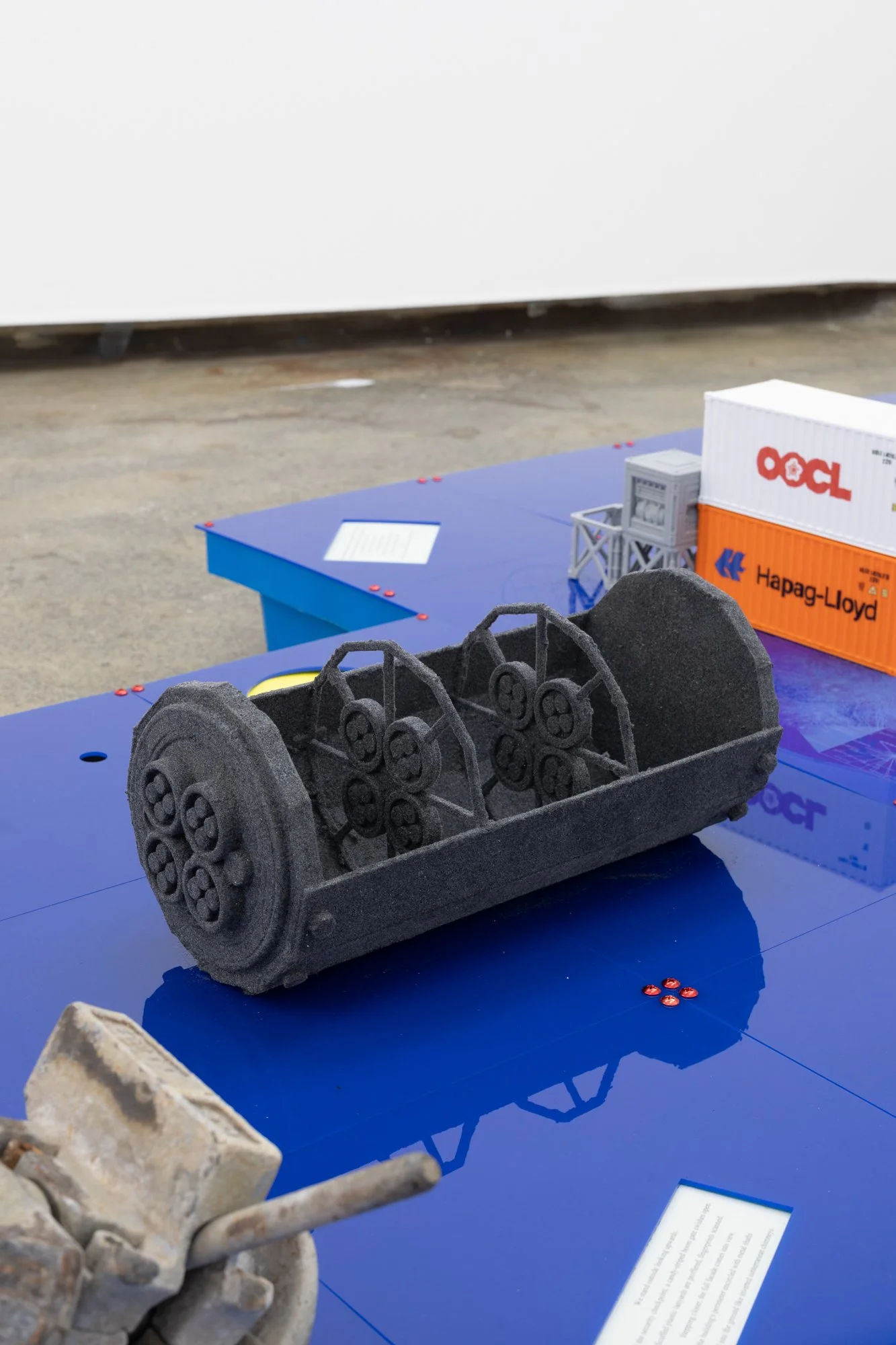
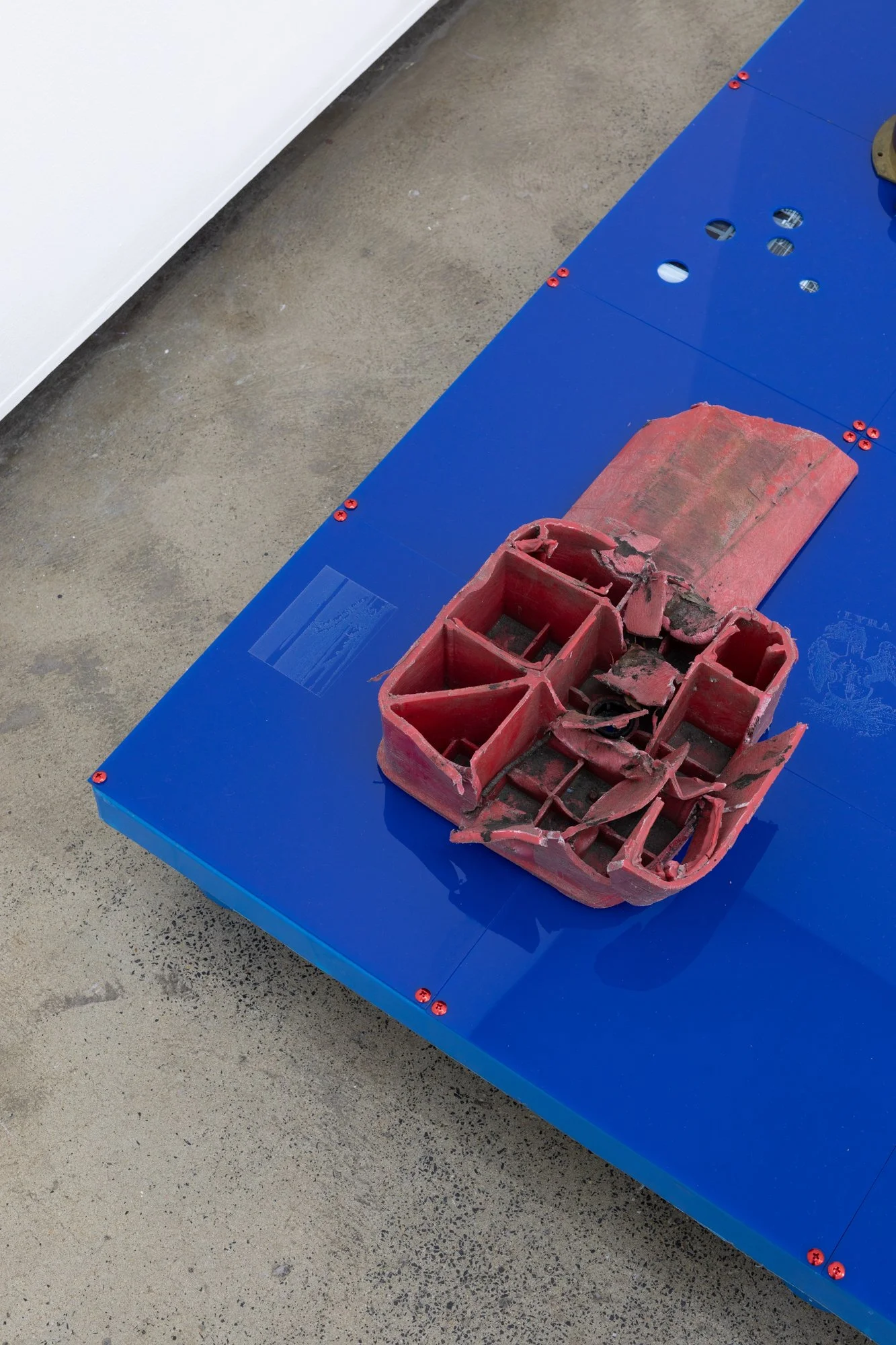
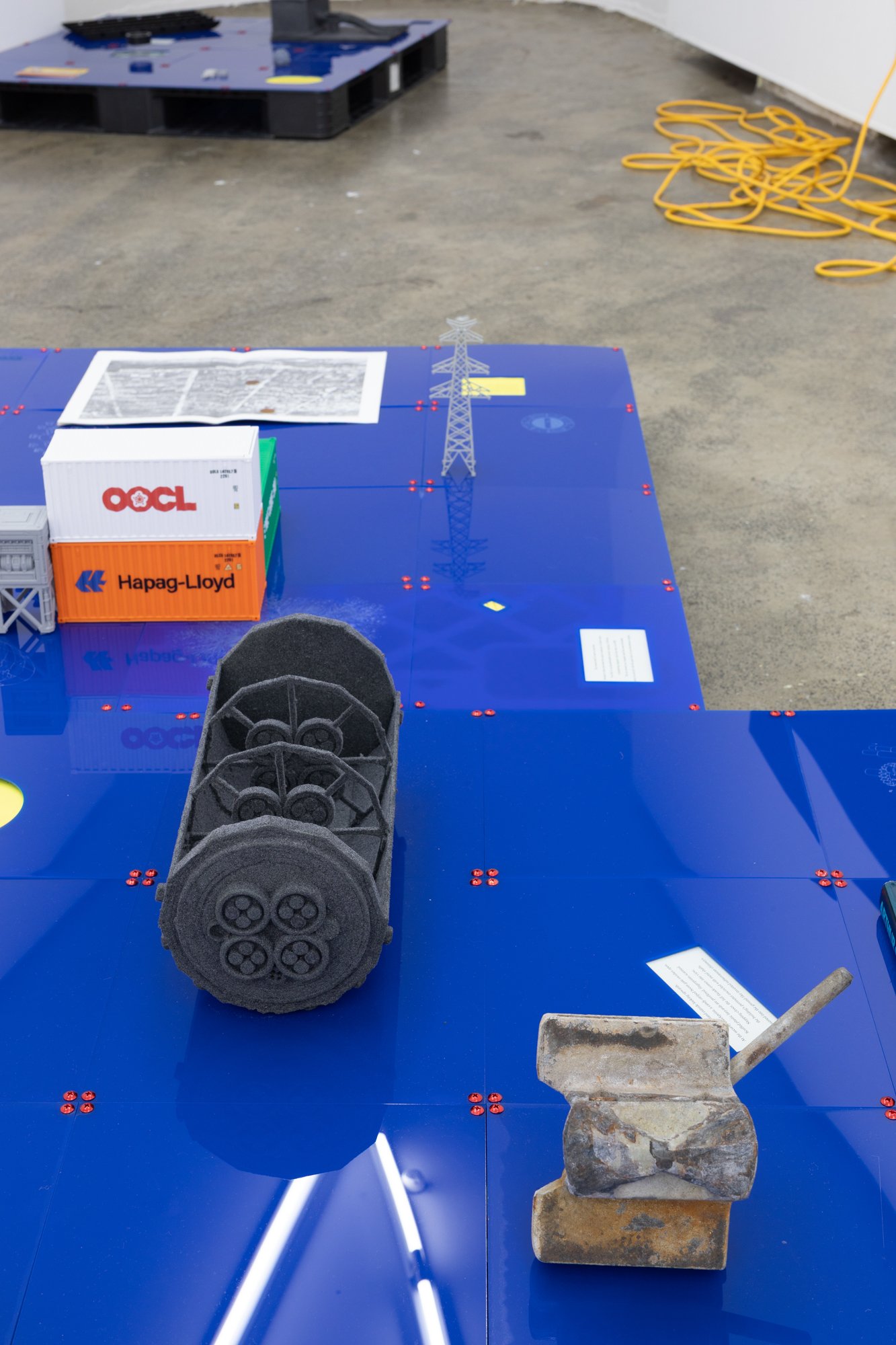
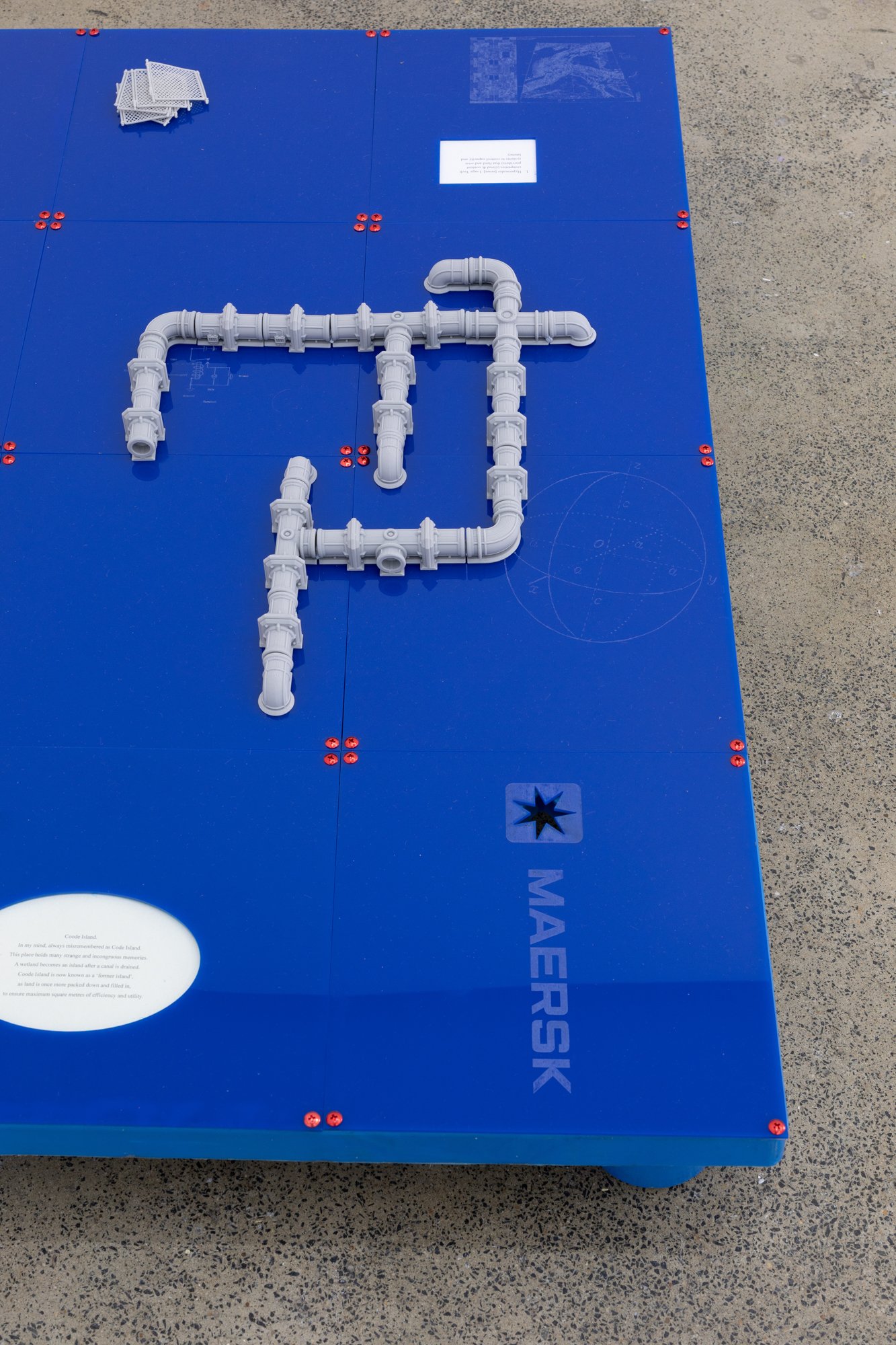
Oliver Hull and Katie Paine, Message Depth – An Ongoing Archive,industrial shipping palettes, Perspex, paper, flock, ply wood, plastic scale models, Arthur C. Clarke's How the World Was One: Beyond the Global Village (1992), radio device, debris from Port Melbourne Data Centre Business Park, resin 3D print, assorted telegraph memorabilia from 1920- 1970, glass, steel, screws, gas valve, shipping container lock.
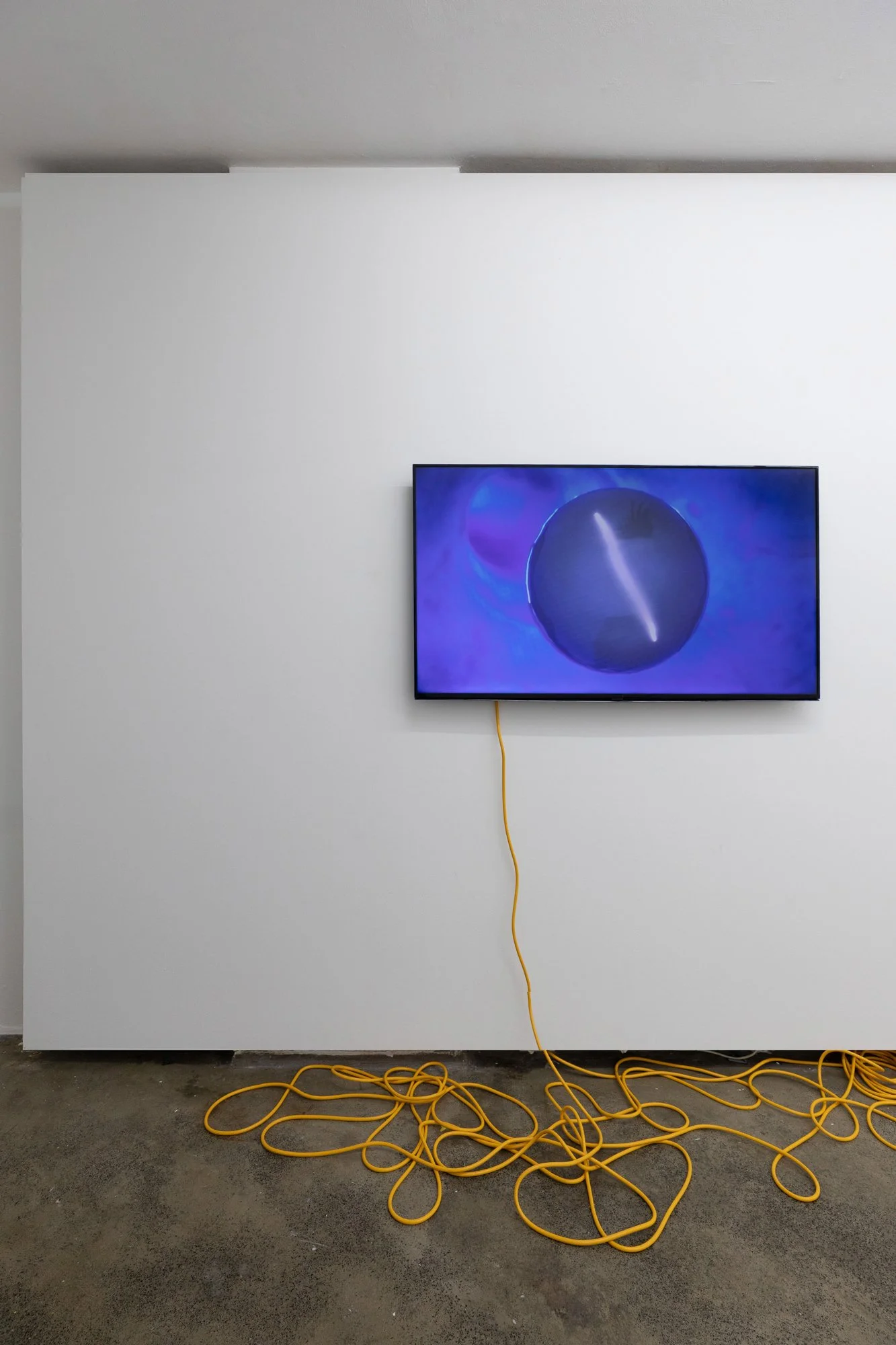
3 Oliver Hull and Katie Paine, Crawlers, video 2026, 16:40.